American Disabilities Act Compliance Traps for Small Businesses
- Curry Andrews
- Mar 30
- 3 min read

From coffee shops to law firms to realtor offices, there has been a noticeable increase in ADA driven lawsuits recently. Many of these businesses (law offices excluded) are not large national chains with huge internal legal departments. Many are local community-based businesses operating in older buildings. The trouble is that these small businesses may not know they are violating the law until they are served with an unexpected lawsuit.
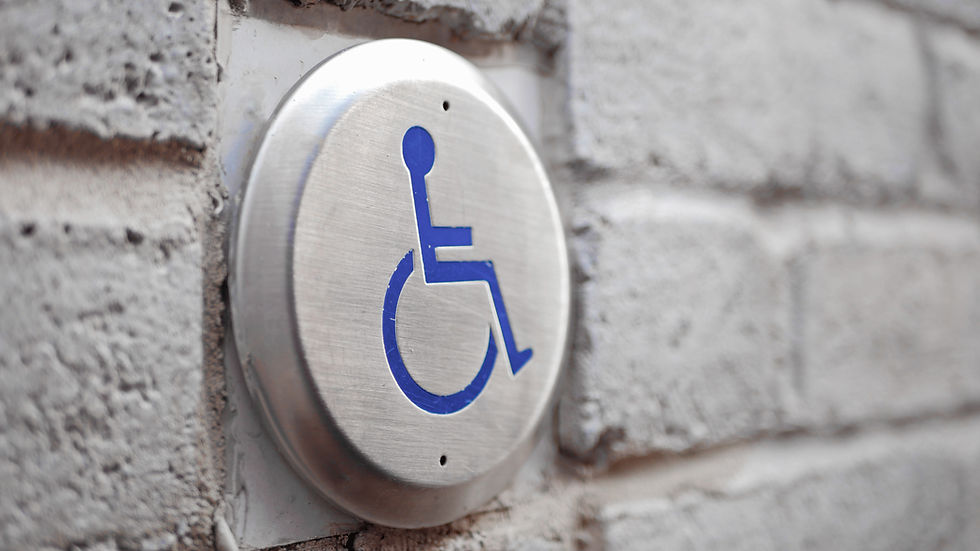
Under the Americans with Disabilities Act and other state laws, businesses that are open to the public must provide accessible paths of “access” meaning travel space, seating, restrooms, service counters, and even what has traditionally been termed, “handicapped parking.” Small, technical violations such as a bathroom mirror mounted an inch too high or a restroom door requiring too much force to open can result in a regulatory fine or lawsuit. It is common for older buildings to have steep slopes at an entry ramp or no entry ramp at all. Conference or exterior dining tables without adequate knee clearance or excessive height can also trigger litigation.
Legacy Properties are particularly vulnerable because of the following idiosyncrasies:
-Outdoor patios, decks or parking spaces with uneven surfaces;
-Historic spaces that have been converted (or not converted) that have step entries with no ramp access;
-Overly tight restroom layouts or narrow doors with toilets that are too high or too low, no railings, no wheelchair accessible sinks and faucets, mirrors too high, light switches out of reach, etc.;
-Any snack or convenience counters that are self-serve and which are placed too high or without adequate “underneath” space for a wheelchair to access;
-Any counter that lacks an accessible section (like a restaurant bar or a front reception counter); and very commonly,
-Inadequate ADA approved parking signage or striping (including adequate space around the parking space for handicap vans or other transportation for those with disabilities.

Take for example a cool wedding venue that’s a remodeled warehouse. There’s awesome brickwork, exposed plumbing and HVAC, wood floors with character…and ADA violations galore. If a bride’s grandmother can’t attend the reception because the venue can only be accessed up a narrow staircase, that’s an ADA lawsuit just waiting to happen. Similarly, if the bathroom door is too narrow or there’s no room to maneuver, no rails, toilet is too high, etc., etc., then the business could be liable.
Frankly, many of these business locations were built decades or even centuries ago. Small business owners might assume they are “grandfathered in,” BUT THEY ARE NOT.
(While the ADA does consider feasibility and cost under the “readily achievable” standard for existing facilities, plaintiffs’ attorneys frequently argue that most common fixes are inexpensive and therefore mandatory and inexcusable.)
Please note that home-based businesses are not exempt. If your workspace is accessible to the public, it should also be accessible to a disabled person. Of course, the private residential portion of your home need not be ADA accessible and offering curbside or in home visits may help you to avoid liability.

What About Non-architectural Issues?
Physical locations are definitely in the target zone, but websites can get “dinged” for inaccessibility for blind users. Recently, a micro-brewery, Blue Bottle” was sued because their website was inaccessible to blind people using screen-reading software. (Plaintiffs’ firms do not care about the size of a business or the success of a business… They simply make broad searches looking for easy targets.)

For instance, the recent surge in lawsuits is largely driven by high-frequency litigants who systematically inspect businesses for technical noncompliance. These cases are rarely about an actual litigant being denied access; they are about technical standards buried in the depths of pages upon pages of regulations.
Cases normally settle in the tens of thousand dollar ranges. This can be avoided by making small adjustments or upgrades that can easily rectify many gaps in your ADA compliance. The good news is that most exposure can be reduced through proactive inspection and correction. A qualified accessibility consultant can identify architectural and electronic issues before they become a lawsuit. Also, it can be important to note that obtaining an inspection can also provide procedural benefits if litigation arises. Final thought: It’s just prudent and kind to take the time to provide access to your business so that disabled customers can be treated with the same courtesy as everyone else.

Curry Andrews, Attorney


Comments